
As we stand at the dawn of 2026, the central question for every entrepreneur is no longer if they should use artificial intelligence, but how does AI automate a business at a structural level?
In the past few years, we moved from “Passive AI” (chatbots that wait for a prompt) to “Agentic AI” (autonomous systems that take action). For a modern business, automation is the only way to combat rising labor costs and complexity. But real automation isn’t just about “saving time” it’s about creating a business that thinks, learns and scales without adding headcount.
Businesses across every industry are learning that automation isn’t just about replacing human effort. It’s about saving time, increasing precision, and reducing burnout caused by manual processes. Whether it’s scheduling emails, processing invoices, or managing customer service, AI has become a behind-the-scenes worker that never sleeps.
In this blog, we explore the specific SaaS tools and agentic frameworks that are redefining the global economy.
What Is AI Automation in Business?
Traditional automation was “Linear.” It followed an $if-then$ logic. If a customer fills a form then send an email. AI automation means combining artificial intelligence with workflow systems to make decisions automatically.
How does AI automate a business differently? It uses Reasoning Engines.
- The Contextual Layer: Instead of just sending an email, 2026 AI “reads” the form, researches the customer’s LinkedIn profile, checks your current inventory and drafts a personalized proposal.
- The Learning Loop: AI automation improves with every interaction. It identifies which email subject lines get more clicks and automatically adjusts its strategy for the next lead.
AI automation is now shaping how small and large businesses operate. It can analyze sales data, predict trends and even write reports. In short, it helps businesses move faster with fewer mistakes and smarter insights.
The Rise of “Agentic Workflows”
The most significant trend for 2026 is the Agentic Workflow.
In this model, your business doesn’t just use one AI; it uses a “Digital Squad.”
1. The Researcher Agent: Scans the web for market trends and lead signals.
2. The Analyst Agent: Filters that data against your business goals.
3. The Executive Agent: Performs the task (schedules the meeting, updates the CRM, or orders the inventory).
Why Are Businesses Turning Toward AI Automation?
Every business wants to grow faster and cut unnecessary costs. That’s where AI fits perfectly. It handles time-consuming processes like data entry, scheduling, or answering customer queries.
According to a McKinsey study, nearly 55% of businesses now use AI in at least one function. The reason is clear: AI improves efficiency without demanding extra human labor.
The companies adopting AI automation are also seeing a noticeable edge. They’re not guessing their next steps; they’re acting on data-driven insights. This level of intelligence makes their decisions sharper and their strategies more predictable.
For small businesses, the attraction is even greater. They can scale faster, automate their marketing, and serve more customers without increasing their team size.

How AI Automates Different Business Areas?
AI’s biggest strength is adaptability. It doesn’t belong to one department, it fits anywhere efficiency is needed.
AI in Marketing & Growth (Hyper-Personalization)
AI analyzes audience behavior, optimizes ad campaigns and predicts what kind of content performs best. Instead of testing endless variations, businesses can let AI suggest what works.
Marketing in 2026 is no longer about “Broadcasting”; it’s about Predictive Intent.
- Creative Automation: Use Midjourney V6 and Runway Gen-3 to generate ad visuals that change based on the weather or local trends in the user’s city automatically.
- SaaS Bridge: Tools like Klaviyo AI or HubSpot’s Breeze now predict when a customer is likely to “churn” and automatically send a specialized discount code to keep them.
AI in Sales Operations (Zero-Touch Pipelines)
From managing inventory to scheduling deliveries, AI keeps operations smooth. It can predict when a product will go out of stock or when machinery needs maintenance, before it happens. That predictive ability saves both time and cost.
How does AI automate a business’s revenue? By making the sales funnel autonomous.
- Intent-Driven Prospecting: Tools like Clay or Warmly monitor hiring triggers or tech-stack changes at your target companies.
- Conversation Intelligence: Platforms like Gong or Chorus listen to your calls and automatically update your CRM with the next steps, saving sales reps 5+ hours of data entry every week.
AI in Customer Service
Chatbots are the face of customer support automation. They reply instantly, never get tired and can handle multiple queries at once. But the real value lies in their ability to learn from every conversation. The more they chat the better they get at solving real problems.
AI in Finance & Accounting (Predictive Cash Flow)
AI-driven systems can track spending, generate financial summaries and detect anomalies that humans might miss. Many businesses use AI to catch fraud or forecast cash flow with higher accuracy.
- Automated Reconciliation: AI-native tools like QuickBooks AI or Bill.com now handle 95% of invoice matching without human error.
- Fraud Detection: AI agents scan every transaction in real-time, flagging anomalies that a human accountant might miss until month-end.
AI in Human Resources
Recruitment has become smarter with AI-powered screening. Instead of manually reading hundreds of resumes, systems can shortlist the best candidates based on data and skills. HR teams also use AI to manage onboarding, internal communication, and employee engagement.
In short, AI workflow automation is reshaping every corner of modern business life.
The 2026 Tool Stack: What You Need Today
| Department | Essential 2026 SaaS Tool | Why You Need It |
| Workflows | n8n or Make.com | To connect all your apps into an “Agentic Team.” |
| Outreach | Copy.ai (Workflows 2.0) | For autonomous, B2B sales sequences at scale. |
| Research | Perplexity Pro | To automate deep market and competitor analysis. |
| Operations | Zapier Central | To build custom AI agents that live inside your apps. |
How AI Works Behind the Scenes?
AI works by analyzing data and recognizing patterns. It’s not magic, it’s math and logic applied at scale.
Imagine you feed it thousands of examples of customer emails. Over time, it learns how people ask questions, what problems are common, and what tone works best in replies. Next time a similar message comes in, it already knows the right response.
That’s how AI brings automation to life, by learning, adapting, and acting faster than humans can.
Unlike traditional software, AI doesn’t need fixed instructions. It improves automatically with experience, making it perfect for business environments where speed and accuracy matter.
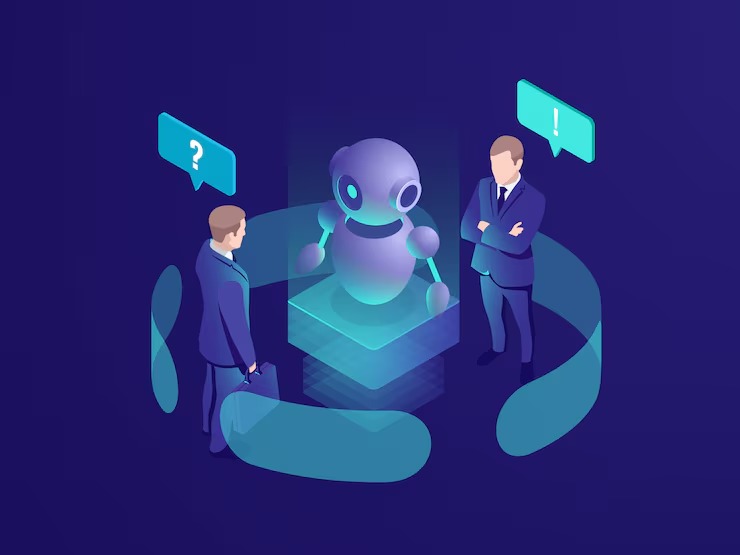
Implementation: How to Build Your “Digital Workforce
If you don’t have serious in-house AI expertise, it’s best to work with a consultant or at least define your goals clearly before selecting tools. Tool selection doesn’t occur in isolation it’s part of a broader AI business strategy.
- Process Audit: Map out your “High-Frequency, Low-Creativity” tasks.
- Data Cleaning: AI cannot automate a business if the data is messy. Clean your CRM first.
- Pilot Program: Automate one small task (like meeting summaries using Fireflies.ai).
- Agent Integration: Connect your tools using n8n to build a “Multi-Agent” system.
- Human-in-the-Loop (HITL): Design a review process where humans approve the AI’s most critical decisions.
AI automation isn’t about jumping on trends; it’s about solving actual pain points. Maybe your team spends hours answering repetitive queries or manually updating sheets; those are perfect starting points.
This isn’t an area where businesses should hesitate. Competitors are already experimenting and gaining efficiency fast. The earlier you integrate AI-driven processes the sooner you’ll see measurable results.
How Businesses Use AI to Gain an Edge?
Today, being competitive isn’t just about having a great product it’s about operating smart. Businesses using AI are gaining speed, accuracy and clarity in decision-making.
For example, predictive AI can help companies plan stock levels or manage seasonal demand. Marketing teams use data models to understand customer intent before launching campaigns.
Small startups are using AI automation to act like big companies. The gap between resource-rich enterprises and lean startups is shrinking, thanks to technology that levels the playing field.
The lesson is clear: automation is no longer optional. The businesses that use AI efficiently are the ones shaping the future.
Challenges of AI Automation
No system is perfect. While AI automation boosts productivity, it also brings new challenges.
- Data Sovereignty: In 2026, privacy is the #1 concern. Ensure your SaaS tools don’t use your “Secret Sauce” to train public models.
- The Skill Gap: Your employees don’t need to code, but they must become “Agent Orchestrators.”
- Cost of setup: Though prices are dropping quality AI systems still require investment.
- Over-dependence: Relying too much on automation can weaken human decision-making.
The goal is balance. Use AI to simplify work not to eliminate the human touch that keeps businesses personal and trusted.

The Future of AI-Driven Businesses
The next stage of AI automation isn’t about simple task replacement, it’s about collaboration between humans and intelligent systems.
AI will soon move from automating repetitive work to predicting business outcomes. Decision-making will become proactive instead of reactive. Systems will alert you before an issue happens, not after.
Experts from Harvard Business Review suggest that the future of business strategy will rely heavily on AI-led insights. Companies that adapt early will have the advantage of speed, learning, and precision.
In short, businesses that use AI responsibly and strategically will define the next decade of growth.
Conclusion
AI is no longer a luxury for big corporations it’s a practical necessity for any business that wants to stay competitive.
How does AI automate a business? It does it by understanding data, removing repetitive work and improving decision-making at every level. It gives people the freedom to focus on creativity and growth while machines handle the routine.
The message for modern businesses is simple: don’t wait. Start small, learn fast and build automation around your biggest challenges. The businesses that win in 2026 will be the ones that stop “doing” and start “designing” workflows.
FAQs
What are the main benefits of AI automation in business?
AI automation reduces errors, saves time and improves overall productivity. It helps companies make faster, more reliable decisions based on data instead of assumptions.
How much does AI automation cost for a small business in 2026?
The “entry-level” for AI has changed. In 2026, you can start with $0–$100/month by using pre-built SaaS APIs (like ChatGPT Plus or Make.com). However, if you are looking for a custom Agentic MVP (Minimum Viable Product), budgets typically start around $10,000–$50,000. Mid-sized companies investing in predictive analytics or custom NLP pipelines for their data often see costs between $50,000 and $150,000.
What are the biggest security risks of “Agentic AI” in 2026?
As AI agents move from “suggesting” to “executing,” the attack surface shifts. The top risks in 2026 are:
Shadow AI: Employees using unsanctioned AI tools that leak sensitive company data.
Agent Hijacking: Hackers using “prompt injection” to trick your AI agents into transferring funds or revealing internal passwords.
Model Poisoning: Adversaries injecting bad data into your training sets to skew the AI’s decision-making.
Can AI handle E-commerce checkout and payments autonomously?
Yes. A major 2026 shift is “Agentic Checkout.” Through partnerships like Visa Intelligent Commerce, AI agents can now complete purchases on behalf of a user. In B2B E-commerce, this means your “Procurement Agent” can negotiate a price with a supplier’s “Sales Agent” and execute the payment once the best deal is reached.
Will my data be used to train public AI models?
Not if you use Enterprise-grade or Sovereign AI solutions. In 2026, most business-focused SaaS tools (like Microsoft Copilot or private instances of Claude) offer “Data Siloing.” This ensures your business secrets stay within your private cloud and are never used to train the general models of OpenAI, Google, or Anthropic.
Do I need a technical team to implement these 2026 strategies?
No. The rise of No-Code AI Orchestration means that “Prompt Engineering” is being replaced by visual drag-and-drop builders. While complex custom models require developers, most 2026 business automation can be handled by a “Business Analyst” or a “Product Manager” using tools like Zapier Central or n8n.
Check out this breakdown of 2026 AI Agent trends to see how high-performing companies are moving beyond simple pilots to full-scale automation. This video highlights the specific gap between companies that are just “experimenting” and those that are truly “scaling” their ROI for the new year.





2 Comments