
Businesses today receive phone calls constantly, but handling every call promptly and professionally can be difficult. Customers often call to ask about products, services, or appointments, and waiting on hold for a human agent can create frustration. AI call answering offers a solution by using artificial intelligence to handle incoming calls automatically.
It acts as a virtual receptionist, responding to customer questions, scheduling appointments, providing information, and transferring complex calls to human staff. For anyone unfamiliar with this technology, AI call answering can seem complicated, but it is easier to understand than it appears.

What Is AI Call Answering
AI call answering is a system where artificial intelligence listens to incoming calls and interacts with callers as a human would. Unlike traditional voicemail or automated phone menus, AI can understand natural language and respond intelligently to questions.
It uses voice recognition and natural language processing to interpret what the caller is asking and provide accurate answers. Some systems handle simple queries like store hours or product availability, while more advanced solutions can process orders, check account information, or even collect feedback.
The purpose is to make communication efficient, accurate, and consistent while reducing the workload on human staff.
How AI Call Answering Works
When a customer calls a business using AI call answering, the system greets them instantly. It listens to the caller’s question and interprets it using artificial intelligence. If the query is straightforward, the AI provides the answer immediately.
For more complicated issues, it can transfer the call to a human employee. Modern AI systems learn from past interactions, which allows them to improve over time. For example, if several callers ask about delivery times, the AI becomes faster and more accurate at providing that information.
Many AI call answering solutions also integrate with business tools such as customer relationship management software or booking platforms, enabling them to check orders, update customer records, and schedule appointments automatically.
Step-by-Step Implementation of AI Call Answering
Step 1: Understand Your Business Needs
Before adopting AI call answering, businesses should identify the types of calls they receive most often. Some companies may need AI to answer basic questions about operating hours, locations, or product availability, while others require it to schedule appointments, take orders, or provide technical support.
Step 2: Choose the Right AI System
Different AI call answering solutions offer different features. Some are designed for small businesses and handle simple tasks, while others are built for larger companies with high call volumes. It is important to select a system that supports the languages your customers speak, integrates with your existing software, and can handle the number of calls your business receives.
Step 3: Train the AI
Once a system is selected, it needs to be trained. Training involves feeding the AI common questions, business-specific information, and potential scenarios. The more accurate and complete the information provided, the better the AI can handle real customer calls.
Step 4: Test the System
Testing ensures the AI responds correctly before it goes live. Businesses can make sample calls to identify gaps in understanding or errors in responses. This step is essential to prevent frustration for real customers.
Step 5: Monitor and Improve
Even after launch, AI call answering requires ongoing monitoring. Analytics can show which questions are answered correctly, how long calls take, and when human intervention is needed. Businesses can update the AI regularly to improve accuracy and maintain a high-quality customer experience.
Benefits of AI Call Answering
24/7 Availability
AI call answering systems never sleep. Customers can call at any time, whether it is late at night, during holidays, or outside business hours. This ensures that important calls are always answered and reduces missed opportunities.
Faster Responses
AI can handle multiple calls at once, eliminating long wait times. Customers receive immediate responses, which improves satisfaction and loyalty.
Cost Savings
Instead of hiring multiple receptionists, businesses can rely on AI to manage routine calls efficiently. This reduces labor costs and allows human staff to focus on higher-value tasks.
Consistent Customer Experience
AI provides consistent responses in a professional tone, ensuring that every caller receives accurate information. This consistency builds trust and strengthens the company’s reputation.
Scalability
As a business grows, AI can handle increasing call volumes without requiring additional staff. Companies can expand operations smoothly while maintaining high-quality customer support.

Can an AI schedule appointments or take orders?
When businesses implement AI call answering, one of the most valuable advantages is its ability to function as a virtual receptionist and manage routine tasks automatically. Modern automated phone systems can schedule appointments, update calendars, and even take orders directly from phone calls without human intervention.
This type of call automation helps restaurants, clinics, and online stores handle high call volumes efficiently. By using AI for scheduling and other repetitive tasks, businesses reduce errors and ensure customer requests are processed quickly and accurately.
Will AI replace human receptionists?
AI call answering is designed to assist rather than replace human receptionists by acting as a virtual receptionist for routine inquiries. It can handle repetitive questions about business hours, order status, or directions, allowing human staff to concentrate on more complex tasks that need personal attention.
Using AI for customer support through automated calls helps companies provide faster responses and maintain a smoother, more efficient customer experience.
How accurate is AI at understanding calls?
AI call answering is designed to assist rather than replace human receptionists by functioning as a virtual receptionist for routine inquiries. It can handle repetitive questions about business hours, order status, or directions, providing reliable AI customer support through automated calls.
This allows human staff to focus on more complex issues that require personal attention, resulting in a smoother customer experience and more efficient business operations.
Real-Life Examples of AI Call Answering
Healthcare Clinics
A small clinic integrated AI call answering to schedule appointments and send reminders to patients. The system reduced missed appointments and allowed receptionists to focus on patients present in the clinic rather than spending hours on the phone.
Online Retail Stores
An e-commerce store used AI call answering to provide updates on order status, shipping details, and return policies. Customers received quick responses, and human support staff could focus on complex issues like damaged products or refunds.
Local Restaurants
A restaurant deployed AI to handle phone orders during busy hours. The AI accurately recorded orders, reducing mistakes and improving overall customer satisfaction.
Tech Support Services
A software company implemented AI to troubleshoot basic technical issues over the phone. Simple problems were resolved instantly, while more complex inquiries were forwarded to human agents.
How AI Call Answering Helps Businesses Beyond Routine Calls
AI call answering does more than just respond to simple queries. It can collect customer feedback, identify frequent complaints, and track call patterns to help businesses improve services. For instance, if multiple callers ask about a delayed shipment, the AI system can alert management to investigate. By integrating with customer relationship management software, AI also helps maintain accurate records of customer interactions, making follow-up calls more efficient and personalized.
Limitations and Challenges
Despite the benefits, AI call answering is not without challenges. Some conversations require human judgment or empathy, which AI cannot fully replicate. Accents, uncommon languages, or complicated phrasing can occasionally confuse the system. Initial setup and training require time to provide accurate responses.
Additionally, businesses must ensure that AI systems follow proper data privacy regulations to protect sensitive customer information.
Comparison with Other Call Handling Systems
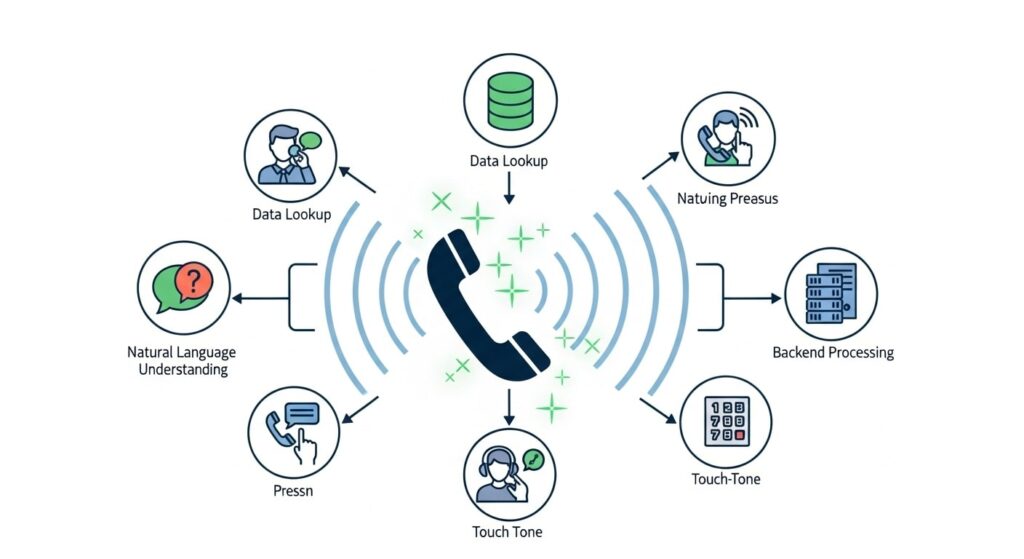
AI call answering differs significantly from traditional interactive voice response (IVR) systems. Unlike IVR, AI can understand natural language rather than forcing callers to navigate a rigid menu. Compared to chatbots, AI call answering works on the phone, offering a more personal experience.
Integration with customer relationship management systems and other business tools allows AI to provide more intelligent responses and maintain accurate customer records, something traditional systems often cannot achieve.
Future of AI Call Answering
AI call answering technology is evolving rapidly. Future systems will be able to handle fully conversational calls, detect caller emotions, and provide personalized experiences based on customer history. Integration with AI assistants and other business tools will make it even more powerful.
Early adoption of AI can give businesses a competitive advantage by improving efficiency, reducing costs, and enhancing the overall customer experience.
Conclusion
AI call answering is transforming the way businesses communicate with customers. It provides instant, accurate responses, reduces costs, and ensures a consistent and professional experience. By automating routine tasks, businesses can focus on more important work while providing excellent customer service.
With continued advancements in technology, AI call answering is becoming an essential tool for any company seeking efficiency and growth.
FAQs
What types of businesses can use AI call answering?
Businesses of all sizes, from small local shops to large enterprises, can benefit from AI call answering. Any business that receives frequent phone calls can improve customer service and efficiency with AI.
Can AI handle multiple languages?
Yes, modern AI systems often support multiple languages and dialects. Businesses should choose a system compatible with their customer base.
How expensive is AI call answering?
Costs vary depending on the system and features. Many small business solutions are affordable and cheaper than hiring additional staff.
Is AI secure for customer information?
Reputable AI systems follow data protection regulations and secure sensitive customer information. Businesses should verify security measures before implementation.
How long does it take to train AI?
Training depends on the complexity of the business. Simple setups may take a few hours, while more detailed systems require days or weeks to ensure accuracy.
Can AI improve over time?
Yes, AI systems learn from interactions. They become more accurate as they handle more calls and receive feedback.
What if AI cannot answer a call?
AI can transfer calls to a human agent if it cannot resolve the query. This ensures that customers are never left without help.