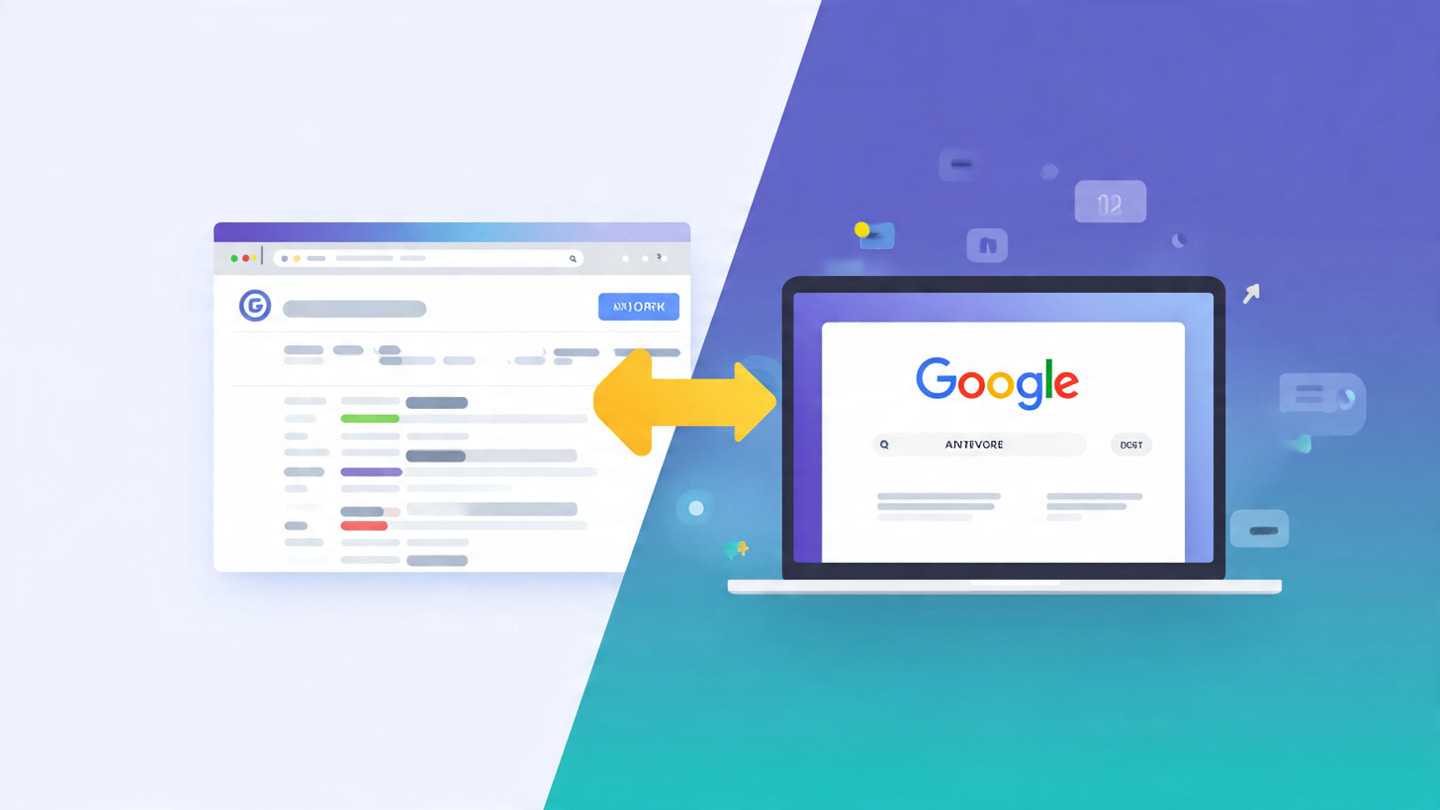
Your search results look different because they are different. If you’ve felt like Google is reading your mind lately understanding vague questions, showing answers before you click or recognizing images you upload that’s Google Gemini at work. This AI is fundamentally changing how search works and whether you’re trying to find information or trying to be found understanding this shift isn’t optional anymore.
AI Overviews are AI-generated summaries shown at the top of Google search results that combine information from multiple trusted sources to answer a user’s question instantly.
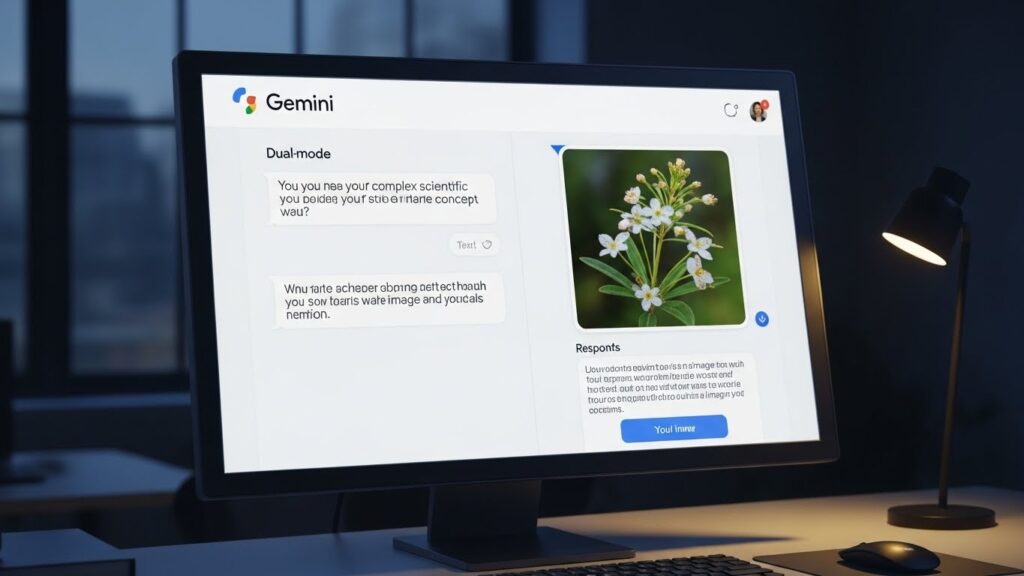
What is Google Gemini and how does it work?
Google Gemini is a multimodal AI model that powers Google Search by understanding text, images, video, and audio simultaneously to interpret user intent rather than just matching keywords.
Unlike traditional search algorithms that match words on a page to words in your query Gemini processes multiple information types at once. When you search for “best camera for wildlife beginners” Gemini understands you’re a novice photographer interested in a specific genre and surfaces results addressing skill level, budget, and technical requirements—even if those exact phrases don’t appear on the page.
The technology uses machine learning to recognize patterns understand natural language and deliver contextually relevant results. According to Google CEO Sundar Pichai, a custom Gemini model brings together multi-step reasoning, planning and multimodality with their best-in-class Search systems.
For more context on how AI is transforming search engines check out Google’s official blog on AI in Search.
How is Google Gemini different from traditional search?
Gemini analyzes search intent and context instead of just matching keywords enabling natural conversational queries and understanding across images video and text.
Traditional search worked like a sophisticated word-matching system. Type “best beginner cameras” get pages containing those words. Gemini analyzes what you actually want to accomplish. It considers your search history, location query structure and even time of day to determine intent.
Here’s a concrete example: searching “pizza” at 7 PM triggers local restaurant results because Gemini understands you want food now. The same search at 10 AM shows recipes assuming you’re planning ahead. This contextual interpretation happens automatically.
The system enables complex queries where users can ask questions with all their nuances and caveats in one go. The multimodal capability sets Gemini apart.
Upload a photo of a broken appliance and Gemini provides troubleshooting steps by analyzing the visual information not just matching similar images. This represents a fundamental shift from text-only search to truly multimodal understanding.
What are AI Overviews in Google search results?
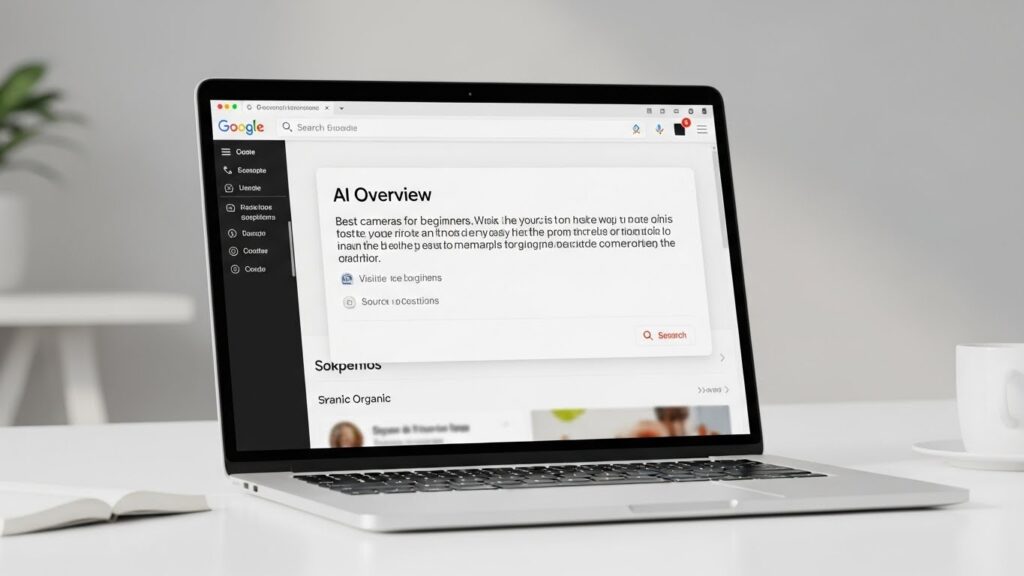
AI Overviews are AI-generated summaries appearing at the top of search results that synthesize information from multiple sources to answer queries directly.
These summaries pull information from various authoritative sources and present a concise answer with citations. When you search “how long to cook chicken breast” you see an AI Overview with temperature timing and key tips all cited with source links.
The format varies by query complexity. Simple questions get brief answers while complex topics trigger more detailed overviews. Research shows AI Overviews average 157 words per response with most staying under 328 words.
User engagement patterns reveal interesting behaviors. Studies indicate that the majority of Google users don’t read past the first third of an AI Overview result consuming only about 30% of the information before making a decision. Despite this many users expand AI Overviews to see the full result before continuing their search.
Google found that with AI Overviews people use Search more and are more satisfied with their results though concerns about accuracy persist. Research shows 75% of consumers express concern about misinformation from AI making source verification crucial.
Google continuously refines these overviews based on feedback. If you spot an error the feedback option helps improve accuracy. For comprehensive guidance on modern SEO strategies visit Search Engine Land’s coverage of AI and search.
Does Google Gemini affect search rankings?
Yes, Gemini influences rankings by prioritizing content that genuinely satisfies user intent over traditional keyword optimization tactics.
The impact is significant but nuanced. Gemini doesn’t favor specific technical factors it rewards content that comprehensively addresses what users actually need. Pages providing accurate well-structured information aligned with search intent rank better while keyword stuffing becomes increasingly ineffective.
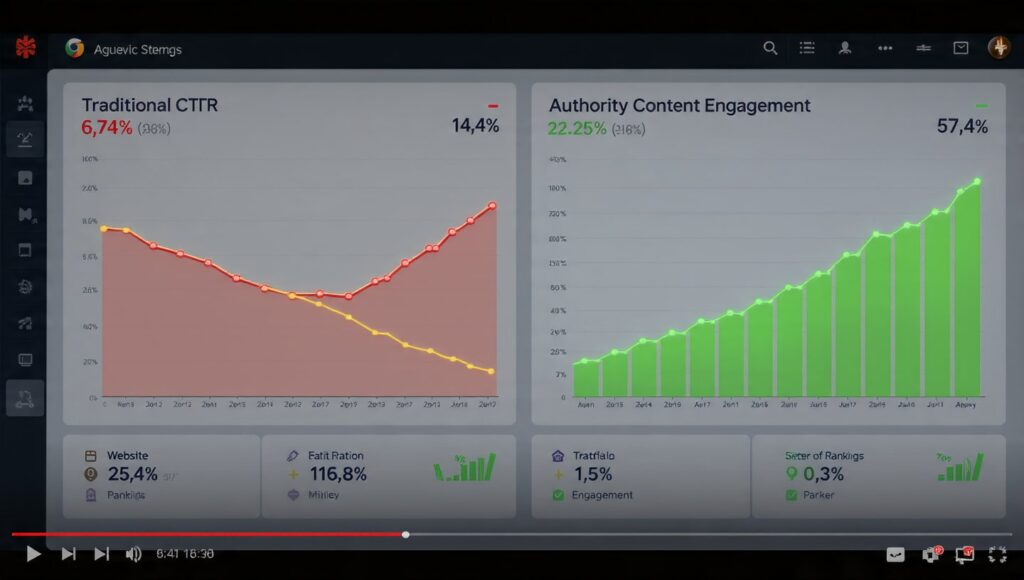
Research from Ahrefs analyzing 300,000 keywords found that the presence of an AI Overview in search results correlated with a 34.5% lower average click-through rate for the top-ranking page compared to similar informational keywords without an AI Overview. This represents a dramatic shift in how visibility translates to traffic.
The data reveals a concerning trend for content creators:
- In March 2024 position one CTR was 7.3% for keywords that later showed AI Overviews which fell to 2.6% by March 2025
- Being first no longer guarantees traffic in the same way it once did
- Click-throughs have steadily declined with a nearly 30% reduction since May 2024, even as impressions increased
However, there’s a silver lining. Links included in AI Overviews get more clicks than if the page had appeared as a traditional web listing for that query according to Google. Being featured in an AI Overview can drive more qualified traffic than a traditional top ranking, despite lower overall click rates.
User engagement signals matter more now. If people click your result and immediately return to search Gemini learns that page didn’t satisfy the intent. Conversely, if users find what they need and stay that signals quality content worthy of continued visibility.
How does Gemini understand search intent?
Gemini analyzes query wording, search history, location, time and contextual clues to determine whether users want information to make a purchase or to navigate to a specific site.
The system evaluates multiple factors simultaneously. The specific words you use matter but so does word order your previous searches where you’re located,and when you’re searching. This creates a contextual understanding that goes beyond surface-level analysis.
Intent classification is sophisticated and falls into distinct categories:
- Informational queries (“how does photosynthesis work”) receive educational content
- Transactional queries (“buy running shoes online”) trigger shopping results
- Navigational queries (“Facebook login”) direct to specific sites
Each intent type generates a different result structure optimized for that goal.
Natural language processing enables synonym recognition and conceptual understanding. Search for “ways to fix a leaky faucet” and Gemini knows you want repair guides even though you didn’t use the word “repair.” It connects semantically related terms automatically.
A query with eight words or more is 7x more likely to get an AI Overview showing how Gemini handles complexity better than traditional search. The more context you provide the more accurately it interprets intent and delivers relevant results.
The system learns continuously. If a particular query type consistently leads users to specific result types, Gemini adjusts its understanding. This machine learning creates increasingly accurate intent detection over time.
Can I search using images with Google Gemini?
Yes, Gemini’s visual understanding allows image-based searches for identifying objects finding products troubleshooting problems and discovering information about what you see.
Visual search has evolved dramatically
Upload a photo or screenshot and Gemini analyzes the content not just matching similar images but understanding what the image contains. This works for identifying plants, animals, products, landmarks, artwork and more.
The technology goes beyond simple image matching. Take a picture of an unfamiliar tree and Gemini identifies the species provides care information and shows similar trees. It’s analyzing characteristics like leaf shape, bark texture and growth patterns not just finding visual duplicates.
Combining images with text creates powerful queries
Upload a dress photo and type “where to buy this in blue”—Gemini understands both the visual style and your color preference. This multimodal approach makes finding specific items easier than struggling to describe styles or patterns in words.
Screenshots work exceptionally well
Capture error messages math problems or complex diagrams and Gemini can help explain the concepts. The system encourages learning rather than just providing answers particularly for educational queries.
Recent updates have brought improved multimodal capabilities with visual Q&A suited for quick and repeatable workflows. This means faster more accurate visual analysis than previous versions making image-based search increasingly practical for everyday use.
For shopping visual search transforms the experience. See a cool jacket someone’s wearing? Snap it, search it, find it no struggling to describe “that modern minimalist style with the asymmetric zipper placement.”
How does Gemini personalize my search results?
Gemini learns from your search patterns, clicks and preferences to tailor results prioritizing content types you find useful while considering location and search context.
Personalization happens gradually as the AI identifies useful content patterns. If you frequently search vegetarian recipes and click plant-based cooking sites Gemini prioritizes similar content in future searches even without explicit “vegetarian” mentions. It’s pattern recognition applied to your individual behavior.
Location plays a significant role. Searches for “best coffee shop” automatically show nearby places. Gemini understands location-based queries need geographically relevant results without requiring “near me” in every search. This contextual awareness extends to understanding local events, regional terminology, and area-specific needs.
Search history within sessions creates conversational continuity. Search “Italian Renaissance” followed by “famous artists,” and Gemini knows you’re asking about Renaissance artists, not contemporary ones. This contextual memory makes follow-up searches more accurate and reduces the need to repeat context.
The personalization extends beyond individual queries. Gemini can remember your interests and preferences across sessions for more helpful responses, building a personalized profile of your needs over time. This creates an increasingly tailored search experience the more you use it.
You control the level of personalization through Google account settings. Limit data usage if you prefer less personalized results, though this may reduce relevance for some queries. The system provides transparency about what data influences your results.
Privacy considerations matter. When you choose personalization, you’re asked to grant permission for Gemini to access your Search history. This is entirely optional, and you can revoke access anytime without losing access to basic search functionality.

What does this mean for content creators and websites?
Content creators face reduced click-through rates as AI Overviews answer questions directly, making in-depth, unique content more valuable than surface-level information.
The landscape has fundamentally shifted. With AI Overviews appearing in over half of U.S. search results, surface-level content providing basic answers struggles to drive traffic. The data paints a challenging picture for traditional content strategies.
According to research:
- Individual sites’ CTR dropped 34.5% when an AI Overview appears
- Position one CTR for informational keywords fell from 0.056 in March 2024 to 0.031 in March 2025
- Being first no longer guarantees traffic as it once did
The e-commerce sector faces unique challenges. Analysis of 25,000 e-commerce queries found that 16% of searches now trigger AI Overviews, yet 80% of the sources cited don’t rank organically. Even more surprisingly, holding a top-three organic position gives only an 8% chance of being cited within an AI Overview.
However, opportunity exists for quality content:
What works now:
- Comprehensive guides that go beyond AI-generated summaries
- Original research and data that AI can’t replicate
- Personal experiences and unique perspectives
- Expert analysis demonstrating genuine knowledge
- Visual content like detailed infographics and videos
What doesn’t work:
- Thin content answering simple questions in 300 words
- Keyword-stuffed articles without substance
- Recycled information available everywhere
- Generic listicles without unique insights
Research shows 78% of AI Overview responses feature either ordered or unordered lists, meaning structured, scannable content performs better. However, don’t sacrifice depth for formatting—provide substantial value within that structure.
Building topical authority helps significantly. Consistently publishing quality content on related topics signals expertise to Gemini. A specialized blog with hundreds of detailed posts outranks one with a dozen generic articles. The bar for “good enough” has risen permanently—only material providing genuine value survives in this environment.
How accurate are Google Gemini’s AI-generated answers?
Gemini’s AI Overviews are generally accurate for straightforward queries but can contain errors, especially for complex topics requiring nuanced understanding or expert judgment.
Accuracy varies by query type. Straightforward factual questions—dates, definitions, basic procedures—show high accuracy. Complex topics requiring judgment, medical advice, legal guidance, or financial decisions need verification with authoritative sources.
Google includes source citations in AI Overviews, allowing you to check where information originated. This transparency helps evaluate reliability and enables deeper investigation when needed. The citation system provides accountability that wasn’t present in earlier AI implementations.
The system has improved significantly since initial rollout. Early versions had notable accuracy issues that garnered public attention, but continuous refinement through user feedback and algorithmic adjustments has reduced errors. However, perfection remains elusive with any AI system.
The platform processes information at massive scale. With AI Overviews reaching 2 billion users every month, the system generates billions of responses. With this volume, some percentage of errors is statistically inevitable, though Google works continuously to minimize them.
If you spot an error, use the feedback option prominently displayed in AI Overviews. Google uses this input to improve accuracy continuously. The AI learns from corrections, becoming more reliable over time through this feedback loop.
For critical decisions, always consult primary sources or qualified professionals. AI Overviews excel as starting points for research but shouldn’t be sole sources for important decisions affecting health, legal status, or financial security. Use them as a first step, not a final answer.
The technology continues evolving. Recent model updates bring improved reasoning capabilities, suggesting ongoing accuracy improvements alongside performance gains. However, maintaining healthy skepticism and verifying important information remains wise.
Will Google Gemini replace traditional search results?
No, Gemini enhances rather than replaces traditional search by adding AI-generated summaries while preserving the familiar list of website links.
The familiar list of links remains below AI Overviews. While AI Overviews now appear in over 11% of Google queries, the majority of searches still show traditional results without AI-generated summaries at all.
Google recognizes different queries need different approaches:
- Simple factual questions benefit from AI Overviews providing quick answers
- Complex research topics work better with traditional result formats offering multiple perspectives
- Shopping queries often show product carousels and comparison tools
- Navigational searches direct users to specific sites efficiently
Think of Gemini as an additional layer, not a replacement. It provides quick answers when appropriate but preserves the ability to explore multiple sources, compare perspectives, and dive deep into topics. This flexibility accommodates different user needs and query types.
However, the balance is shifting. AI Overviews now appear in more than 50% of all search results in the United States, showing rapid growth from earlier adoption levels. The trend clearly points toward increased AI presence across more query types.
As technology evolves, we’ll see deeper integration between AI-generated content and traditional results. But the fundamental ability to browse and choose from multiple sources will remain central to search functionality. Google has stated its commitment to maintaining the open web ecosystem while improving search experiences.
For industry analysis on search evolution, check out TechCrunch’s coverage of Google’s AI developments.
How can I optimize my content for Google Gemini?
Create comprehensive, well-structured content answering user questions thoroughly while demonstrating genuine expertise and using natural language that matches how people actually search.
Focus on genuine helpfulness over optimization tricks. Gemini rewards depth, accuracy, and usefulness above all. Address the main question completely, then cover related questions users might have. Anticipate follow-up queries and include that information naturally within your content.
Structure matters significantly for visibility:
- Use clear headings reflecting actual user questions
- Make headings descriptive rather than clever
- Help both Gemini and human readers find information quickly
- Create scannable content with logical information hierarchy
Write naturally, matching how people speak and search. The era of awkward keyword phrases is over. If it sounds weird when read aloud, it’s not how you should write. Conversational language that flows naturally performs better in AI-powered search.
Include genuine expertise. Share unique insights, personal experience, original research, or expert analysis that AI can’t easily generate. This differentiation keeps your content valuable despite AI-generated summaries. Be the authoritative source AI cites, not the summary itself.
Keep information accurate and current. Research shows most AI Overview responses contain between 6 and 14 sources, with Gemini favoring fresh, current content for timely topics. Regularly review and update existing content to maintain relevance and accuracy.
Make content accessible and scannable:
- Use clear language accessible to your target audience
- Define technical terms when first introduced
- Include relevant images with descriptive alt text
- Format text with appropriate white space and visual breaks
Quality over quantity always wins. AI Overviews are typically short, averaging 157 words per response, but they cite longer, more comprehensive sources. Focus on being the authoritative source that AI references rather than trying to match the brevity of summaries.
Build topical authority through consistent publishing. A focused site with extensive coverage of related topics signals expertise better than scattered content across unrelated subjects. Gemini recognizes and rewards demonstrated expertise in specific domains.
What’s the future of search with Google Gemini?
Search is evolving toward conversational AI assistance with deeper personalization, expanded voice and visual capabilities, and seamless integration across Google’s ecosystem.
Search is becoming increasingly conversational. Gemini 3 Flash is now the default model for AI Mode globally, representing Google’s commitment to chat-style search interactions. Expect to interact with search more like you’re talking to a knowledgeable assistant rather than typing keywords into a box.
Voice search will expand as natural language understanding improves. Asking complex questions aloud and receiving comprehensive answers will become standard, not exceptional. The technology already handles conversational queries well; improved voice interfaces will make this even more accessible and natural.
Visual capabilities continue advancing rapidly. More U.S. users can now create and edit images directly in AI Mode, showing how search is becoming a creative tool, not just an information finder. Searching with what you see not just what you can describe in words—will become primary for many use cases.
Personalization will deepen significantly. Gemini doesn’t just give answers; it evolves with you, sparking new ideas and building on previous discoveries with personalized insights. Search results that anticipate needs before you fully articulate them will become normal, creating increasingly tailored experiences.
The integration with other Google services expands continuously. AI Mode can handle comparison and planning tasks, multi-intent searches, and research-style queries, showing evolution from simple lookup to complex problem-solving. This transformation changes search from a tool into an assistant.
For users, this means more efficient, natural, and helpful search experiences. For content creators, it demands adaptation to a landscape where quality, depth, and genuine value are the only sustainable strategies. The middle ground of “good enough” content is disappearing.
The line between search and assistance continues blurring. Rather than just finding information, Gemini will increasingly help you accomplish tasks, make decisions, and solve problems by synthesizing information and presenting actionable insights. We’re witnessing search’s transformation from information retrieval to intelligent assistance.
FAQs
Does Google Gemini work in all countries
AI Overviews are available in over 200 countries and territories and 40 languages. The feature began in the U.S. and has expanded globally, though availability and features vary by region. Google continues rolling out AI-powered search features to additional markets.
Can I turn off AI Overviews in my search results?
No, there’s no official way to completely disable AI Overviews in Google Search. They appear automatically when Google determines they’re relevant to your query. However, they don’t appear for every search—currently showing in over 50% of U.S. searches but less frequently in other markets.
How many sources does an AI Overview typically use?
Most AI Overview responses include between 6 and 14 sources, with 9 sources being the most common. The number varies based on query complexity and available authoritative content. Longer, more complex answers cite more sources to support their claims
Will AI Overviews hurt my website traffic?
Potentially yes, especially for simple informational queries. Research shows individual sites’ CTR dropped 34.5% when an AI Overview appeared. However, comprehensive, unique content can still drive traffic as users seek depth beyond AI summaries. Being cited within an AI Overview can actually increase clicks compared to traditional rankings.
What types of queries trigger AI Overviews most often?
Informational keywords consistently make up nearly 90% or more of all triggers. Complex, multi-step questions with 8+ words are 7x more likely to generate AI Overviews than short queries. Simple navigational or transactional searches rarely trigger AI Overviews
Is Google Gemini the same as ChatGPT?
No. While both are AI language models, Gemini is Google’s proprietary system integrated directly into Search with real-time web access. ChatGPT is OpenAI’s chatbot with different capabilities and training. Gemini has multimodal capabilities specifically designed for search applications.
How often does Google update Gemini?
Google continuously updates Gemini without user-facing announcements for most changes. Gemini 3 Flash was recently rolled out globally, with regular improvements to reasoning, accuracy, and capabilities happening frequently. Major updates are announced, but incremental improvements occur constantly.







2 Comments