

If you have been in real estate for a while, you know how messy things can get when the leads start coming in. You save phone numbers on your phone, keep notes in a diary, and store property files in random folders. After a few weeks, it becomes hard to remember who asked about which property, or when you last followed up.
That’s where a CRM comes in. A CRM (Customer Relationship Management) system helps real estate investors organize everything in one place. You can manage contacts, track conversations, see what stage each deal is in, and plan your next move without guessing.
In this guide, we will go through what a real estate CRM for investors actually does, why it is so useful in 2025, and how you can choose the best one for your real estate business.
What is a Real Estate CRM?
A real estate CRM is a simple tool that stores and manages your client and property information.Instead of keeping details in different places, you can see everything together, phone numbers, email history, property interests, appointments, and deal progress.
If someone fills out a contact form on your website, that information can go straight into your CRM. From there, you can schedule a call, send a follow-up message, and set reminders for later.
The main idea is to make sure you never lose a lead and always know what to do next.
How a Real Esate CRM for Investors Helps and Why They Need?
Almost 90% of top-performing real estate professionals now use a CRM. It’s not an extra tool anymore, it’s part of how they work.
Many investors start out with spreadsheets or notes on their phone. It works for a few deals, but as your contacts grow, small mistakes start to pile up. You forget who you called, lose track of a lead, or miss a follow-up. That’s when things begin slipping through the cracks.
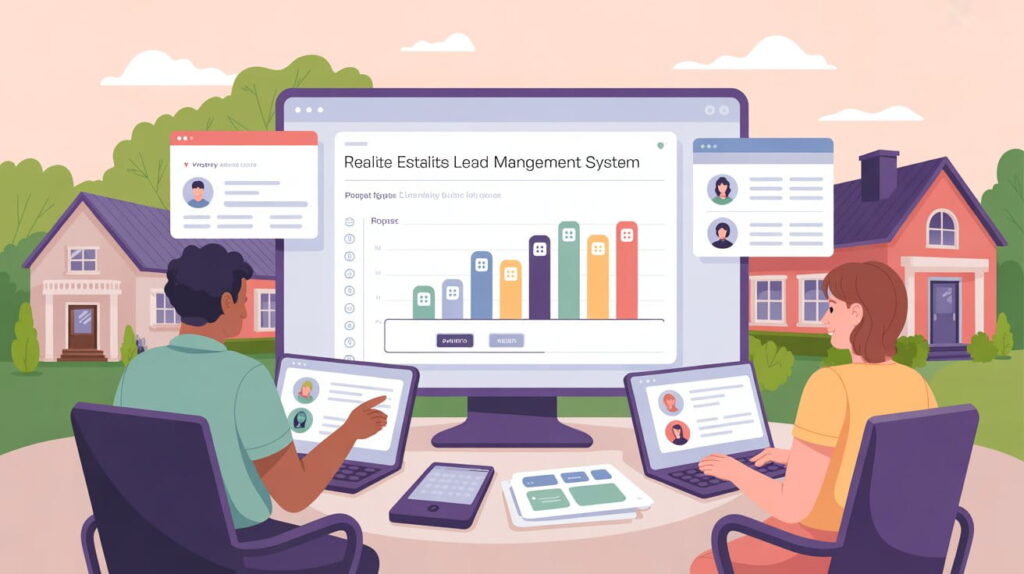
A CRM fixes that. It keeps every conversation, lead, and document in one place, so you never lose momentum. Think of it as your personal assistant that never sleeps.
Here’s what it does for you in simple terms:
- Tracks every lead automatically: Each new contact goes straight into your database with notes, source, and tags (buyer, seller, or investor).
- Reminds you to follow up: You can schedule automatic emails, texts, or task reminders, no more missed opportunities.
- Shows your entire pipeline: You can see which deals are new, which are active, and which are about to close.
- Stores client profiles: Each profile includes their preferences, last contact date, and deal progress.
- Keeps your team connected: Everyone can see the same updates in real time, avoiding confusion or double work.
The best part? It replaces the scattered notes, sticky reminders, and lost contacts. Once you start using one, you’ll wonder how you ever managed without it.
The Smart Side of Modern CRMs (AI and Automation )
Technology has changed how investors handle leads. Modern real estate CRMs for investors are not just digital notebooks anymore, they’re intelligent tools that can think ahead for you.
AI-powered CRMs can now do small but powerful things that save hours every week. For example:
- Smart follow-ups: The system reminds you when a lead has been quiet for too long or automatically sends a gentle check-in message.
- Predictive insights: Some CRMs look at your deal history and tell you which leads are more likely to close based on engagement and response times.
- Automated workflows: You can set triggers like, “If a new seller lead is added, send a welcome text and assign a task to my assistant.”
- Voice and chat integration: Many modern tools now connect with WhatsApp, text, or chatbots, so your leads can message you directly from your website and the CRM keeps the record.
The goal isn’t to replace the human touch. It’s to make sure nothing slips through the cracks.
You still make the deals. AI just helps you reach the right person at the right time, without extra effort.
Case Example: How a Small Investor Doubled Deals with a CRM?
Let’s take an example. Sarah, a small real estate investor from Austin, used to manage everything in a spreadsheet. As her business grew, she couldn’t keep up with new inquiries. Some clients got multiple follow-ups, while others never heard back.
She decided to try a CRM that was made for real estate. Within a few weeks, she started noticing a difference.In three months, Sarah closed 30% more deals simply because she stayed consistent. The CRM didn’t make her a better agent , it just helped her stay organized and responsive.
- Every new lead from her website went straight into her CRM.
- She set automatic reminders for follow-ups.
- Her assistant could update deal stages without calling or texting her.
How to Choose the Best Real Estate CRM for Investors?
There are hundreds of CRMs out there, but not all of them work well for real estate. Here’s a simple roadmap to help you find one that fits your needs.
Know Your Goals
Start by asking what you want the CRM to do for you. Do you need it to manage buyers and sellers? Handle property listings? Automate messages? Once you are clear about your goals, you can focus only on the features that matter.
Pick Something Simple
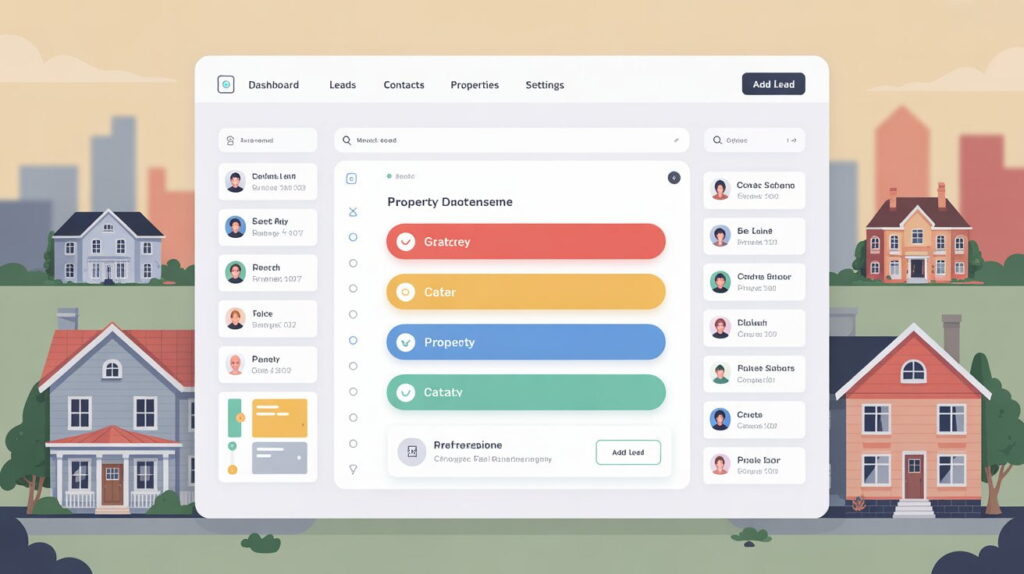
Your CRM should be easy to understand. If it feels complicated during the trial, it will stay complicated later. Look for a system with a clean dashboard and visual pipelines.
A good example is Pipedrive, which is known for its simplicity and quick setup.
Choose One Built for Real Estate
A general CRM might work, but a real estate CRM usually has built-in tools like property tracking, lead pipelines, and task automation. REsimpli is a good example. It is built specifically for real estate investors and includes features like property management and deal tracking.
Check Integrations
Your CRM should connect with your existing tools like : Gmail, Google Calendar, or social media accounts. This saves time and keeps data consistent.
HubSpot CRM is great at connecting with marketing and communication tools.
Look for Support and Learning Resources
No matter how simple a tool looks, you’ll always need a bit of help getting started. That’s why it’s important to see if the company offers good tutorials, step-by-step guides, or live chat support.
For example, Zoho CRM is a favorite among small businesses because it comes with plenty of training materials and responsive customer support, making it easier to learn and use from day one.
Popular Real Estate CRMs Compared
There’s no single “best CRM for real estate investors.” The right one depends on your style of investing, your budget, and how much automation you need.
Here’s a quick comparison of three popular tools investors often start with:
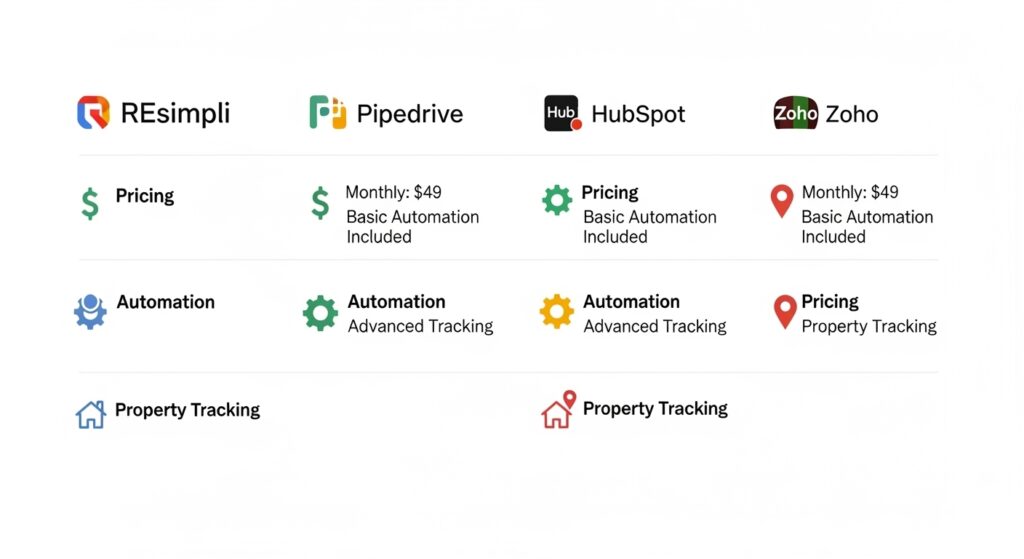
| CRM Tool | Best For | Key Features | Starting Price |
| REsimpli | Real estate investors and wholesalers | Built-in dialer, texting, direct mail campaigns, property pipeline, lead tracking | From $99/month |
| Pipedrive | Simple deal tracking and visual pipelines | Drag-and-drop stages, automated follow-ups, email sync, contact management | From $24/month |
| HubSpot CRM | Beginners and small teams | Free plan, email templates, meeting scheduling, lead analytics | Free – $45/month |
| Zoho CRM | Growing real estate teams | Workflow automation, AI assistant “Zia”, mobile app, integrations with Google Workspace | From $20/month |
If you’re new, start with something simple like HubSpot or Pipedrive, both are easy to learn.
Once your leads grow and you want to manage direct mail or SMS marketing, move to REsimpli or Zoho, which are built more for property-focused investors.
Key Features to Look For in the Best Real Estate CRM for Investors
Every real estate CRM for investors promises results, but not all are designed for real estate work. When choosing a CRM, make sure it helps with these five areas.
Lead Tracking and Segmentation
Your CRM should let you tag, filter, and categorize leads. This makes it easy to find hot prospects, buyers, and sellers quickly.
Example: You can create groups like “wholesalers,” “motivated sellers,” or “rental prospects.” This way, every time you send a message, it reaches the right audience.
Pipeline Management
A good CRM shows your sales pipeline visually, you can see deals moving from one stage to another. It helps you plan the next step and avoid losing potential buyers.
Automation Tools
Look for built-in automation for emails, follow-ups, or data entry. Even simple reminders can make a big difference when handling many leads.
Integration with Other Tools
Make sure your CRM connects with your email provider, social media, and calendar. Integrations make your workflow smoother and prevent double work.
Reporting and Analytics
Reports help you understand which campaigns bring leads and which ones waste money. Over time, you’ll be able to predict future deals and plan better.
Other Useful Features That Can Help
- Drip Campaigns: Send scheduled emails or texts to nurture leads.
- Mobile Access: Manage deals from anywhere.
- Live Chat Integration: Collect leads directly from your website.
- Call Recording: Keep track of what you discussed with each client.
- Role-Based Access: Control who can edit or view data on your team.
How a CRM Improves Team Collaboration?
If you work with other agents or assistants, a CRM can make teamwork easier. Everyone can see updates instantly, assign leads, leave notes, and avoid sending the same message twice.
This shared visibility prevents confusion and keeps deals moving faster. Whether your team is in one office or spread across cities, everyone works from the same playbook.
Common Mistakes When Choosing a CRM
Remember: the best CRM is the one you’ll actually use every day. The goal of a CRM is to save time, not add more work.
- Choosing a Complicated Tool: Many investors give up because the CRM feels too technical. Start simple.
- Not Using Automation: If you still send every email manually, you are not using the CRM’s power.
- Ignoring Mobile Access: You need to respond quickly even when you are on-site.
- Skipping Team Training: Make sure everyone knows how to use it correctly.
Final Thoughts
Managing a real estate business without a CRM is like trying to organize a city map in your head. You can do it, but it takes too much effort.
A CRM system simplifies everything. It keeps your data, communication, and deals in one place. It saves time, reduces errors, and helps you build better relationships.
The best CRM for real estate investors is not the most expensive one. It is the one that fits your workflow, is easy to use, and supports your goals as you grow.
Once you experience the comfort of having your leads and clients organized in one dashboard, you won’t want to go back to spreadsheets again.
PROTIP: The most successful investors aren’t the ones working the hardest, they’re the ones working the smartest.
A good CRM won’t just store your data; it’ll give you back time to focus on deals that matter.
FAQs
What is the best CRM for real estate investors who are just starting out?
For beginners, tools like Pipedrive or HubSpot Free CRM are a good choice. They are simple, affordable, and cover all the basics.
Can a CRM connect with my website or social media?
Yes. Most CRMs allow you to capture leads directly from your website forms or social media ads and add them to your contact list automatically.
Is a CRM worth it for small real estate teams?
Definitely. Even solo investors benefit from a CRM because it helps them track leads, stay consistent, and appear more professional.
How much does a real estate CRM cost?
You can start for free with limited features or pay around $30 to $99 per month for advanced tools and automation.
Can artificial intelligence improve real estate CRMs?
Yes. Many CRMs now use AI to suggest which leads are most likely to convert, helping investors focus on the right opportunities.







28mn1r